
Every writer knows the primacy of Place in telling a story.
Defining where a story happens both taps into your audience's knowledge or interest in the locale as well as helping to make them comfortable in a world that could be far removed from what's familiar to them.
When the process is done well, you reap great rewards in story potential, character dimension and unique plot twists that couldn't happen anywhere else.
Great examples of this from last season's crop of TV shows include "Justified" and "Treme" and can be repeatedly seen in the way "Friday Night Lights" nimbly reinvents itself from one season to the next.
When place is ignored or hidden, as it was in many of the series that came and went, you end up with cop or lawyer shows indistinguishable from one another or what's come before. And then, no matter how well the rest of the story telling and execution play out, there's a level of connection unavailable to those who might have kept watching if they could ascribe a recognizable local identity to the events.
Tony Soprano wouldn't have been the same guy without his Jersey surroundings and Vic Mackey owed much of his particular bent to his LA environment. Understanding Place makes everything clearer.
One of my own minor fascinations with Place is the difference between people who live in big cities and those who make their homes in less populous regions. A stock broker and a lumberjack might order the same thing for breakfast, but everything from the way they hold their coffee cup to how they use a napkin changes after that. A Harvard professor prepares for work on an intellectual level while a farmer scans the sky knowing he has to take nature into account.
Those dichotomies were never clearer to me then when I was writing and producing "Top Cops" for CBS. On my first ride-along in a NYPD patrol car, I realized that no New York patrolman moved on a call without radioing for "Backup forthwith" and reinforcements never arrived more than a minute or two after the original officers dispatched.
Our Executive Producer was a born and bred New Yorker who'd served 20 years as a NYPD detective. He knew policing inside out -- and yet he was continually brought up short in situations involving small town and rural cops.
We once profiled a North Dakota Highway Patrol officer who'd had to deal with a dangerously violent situation single-handed. The fact that his nearest back up was 200 miles away made complete sense to me, a prairie kid from Saskatchewan. But the Exec's New York perspective on the world made anybody willing to accept that kind of occupational hazard impossible to comprehend.
Which brings me to the current debate over enforcing immigration laws in Arizona.
For starters, I want to say, not being an American, that I don't fully grasp concepts like where States Rights end and Federal ones begin or vice versa. I don't know the current level of racial tensions in Arizona either. But on the few occasions I've visited, the Mexican residents seemed far more integrated and accepted than they did during all the years I lived in LA County.
And during my time in Los Angeles, I was always aware that as a non-resident, I needed to have some kind of identification with me at all times. It's apparently the law.
But what I understand well is people and Place. And it surprises me that so little consideration seems to be being given to the concerns (real or imagined) of the people most involved with and closest to the issue.
And I think a lot of that comes down to not understanding the Place part.
According to statistics, Arizona is one of the most porous sections of the US-Mexico border with up to 1000 illegal immigrants crossing it daily. Most of those people are merely looking for a better life or to escape a vicious drug war between cartels that is killing tens of thousands of Mexican citizens every year.
But some sneaking in undeterred or undetected are also members of those cartels.
In the last couple of years, Phoenix has replaced Bogota, Columbia as the #2 Kidnapping capitol of the world. #1 is Mexico City. Rural police officers have been ambushed by drug smugglers and isolated ranchers have been attacked and killed as well.
In one case a few weeks a go, a police officer was wounded in a shootout with drug smugglers. Other officers managed to reach him in time. But nobody was put at risk chasing his attackers. The darkness and the distances just made that job too dangerous even for trained police officers.
Having grown up in a place where the closest neighbor was a couple of miles off and police or ambulances might be hours away, I can understand how a lot of people in Arizona feel.
What I have trouble understanding is why those opposed to the action the state and its citizens want to take have deemed them racist or fascist or both.
Maybe there are differing political agendas at play. But when dairy farms along the American border with Quebec are being expropriated to strengthen the integrity of a border hardly anybody but guys smuggling cigarettes seems to sneak across, it makes you wonder why there's so much resistance to dealing with a much bigger problem elsewhere.
It seems to be a case of people from one Place with a particular perspective unable to see the perspective of those in a different Place.
Maybe putting a different story in the same place would help them.
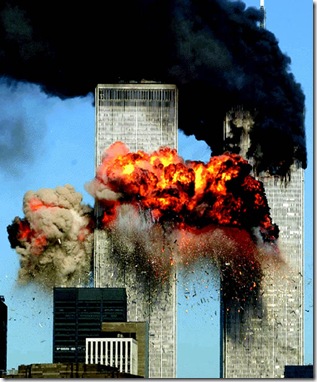
On 9/11 Osama Bin Laden launched an attack on New York City. And in the days that followed, thousands of Americans who had never been to New York came to the city's aid, including many from Arizona, maybe even some from those lonely ranches near the border.
Not long after, American soldiers went to Afghanistan to go after those who attacked them. Some of them were from Arizona. Maybe a few were kids who grew up near the border. They likely didn't fully understand the pain New Yorkers were in, but they knew their country felt endangered and they wanted to help.
Some of them probably died in Afghanistan. Some are probably still there. Whether its a just war or not, they're doing what they feel they have to so guys in New York and Washington and places they've never been can feel safe.
How come the people in those cities don't want the same for those in Arizona?
A couple of weeks ago, the CIA admitted they had absolutely no clue where Osama bin Laden is hiding. They say they're pretty sure he isn't in Afghanistan anymore. He might be just over the border in Iran or Pakistan. But he could be anywhere.
Now, put yourself in Osama's sandals for a minute.
You still want to destroy America. You prefer (or have grown used to) living in a desert cave. You need to be in the last place anybody would look for you. Hey, what's wrong with Arizona?
If a thousand Mexican peasants can sneak across the border every night without much trouble, how hard could it be for a guy who's ducked the CIA for a decade?
If many of those people could make the journey carrying all their worldly goods or a knapsack full of Cocaine, lugging in a portable dialysis machine would be a breeze.
Or a suitcase nuke.
Or a regular sized one that fits in the back of a van or a Ryder truck like a lot of the drug shipments coming through do now.
And how many guys trained in an Al-Qaeda camp could you bring in with you? Looks like Battalion strength if you needed it. But easily enough to help you find one of the many spectacular caves available in Arizona.
And it doesn't even have to be one that well hidden given that you don't have to worry about drone surveillance planes anymore.
Come to that, nobody's going to notice an Afghani tan around any pool in Scottsdale or Yuma. Osama and the boys could rest up a little, get a nice mineral scrub and a shower. Maybe catch a Coyotes game or two (God knows there are seats available) before heading out to do whatever they want to do anywhere else in the country.
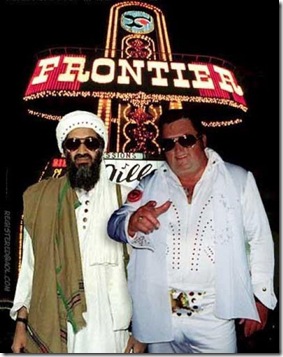
Far fetched?
Really?
How much sense do No-Fly lists, cargo inspections and taking off your shoes at the airport make if anybody who really means you harm just has to stumble their way across a few miles of sand?
The people who live in Arizona seem to understand that. Why is everybody else having so much of a problem?


